
How Alani Nu Built a $1.8 Billion Brand by Understanding an Overlooked Customer
In 2018, the energy drink market had a clear identity: dark packaging, aggressive branding and products largely designed with men in mind. Yet women were already buying energy drinks.
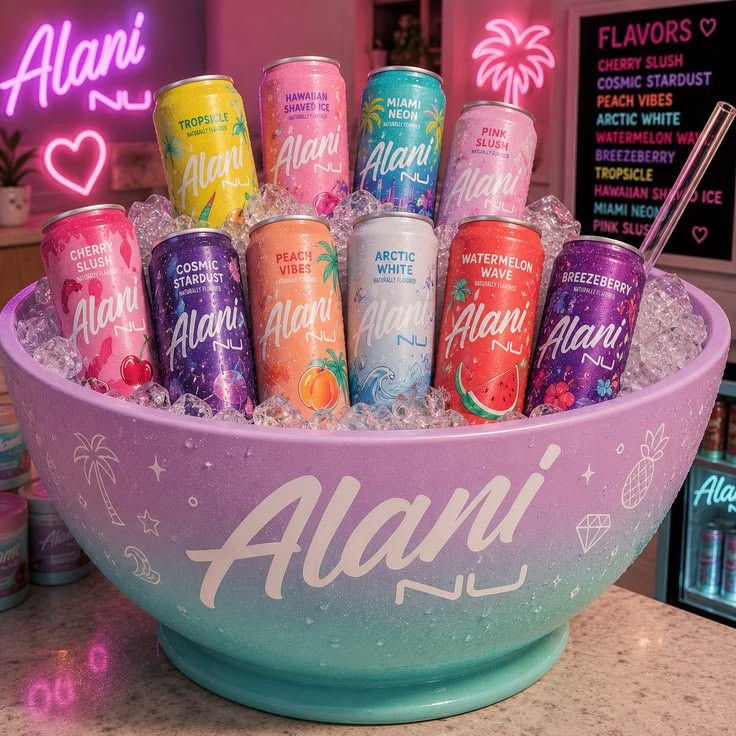
The opportunity was not to create a completely new category. It was to make an existing category feel relevant to an underserved customer.
That became the foundation of Alani Nu. Founded by fitness entrepreneurs Katie Hearn and Hayden, the brand launched in 2018 and, within six years, was acquired by Celsius for $1.8 billion. Its growth offers a useful case study in customer positioning, influencer marketing, direct-to-consumer commerce, loyalty programs and retail expansion.
But the story also demonstrates an important warning: the same branding choices that can make a product commercially powerful can create serious risks when a product has health or age-related restrictions.
Finding Demand That Already Exists
Before Alani Nu existed, women were already purchasing energy drinks. The problem was that many of the products on shelves did not appear to be designed for them.
Katie Hearn had built a large fitness-focused audience on Instagram beginning in 2018 and had spent years coaching women individually. Her husband Hayden operated a personal training facility. Through their work, they repeatedly encountered questions about supplements and what products women could trust.
Instead of simply recommending existing products, they decided to create their own.
The initial proposition was straightforward:
- Make the ingredients easier to understand.
- Build packaging specifically for women.
- Create flavors and branding that felt culturally relevant to the target customer.
- Sell directly to an audience that already trusted the founders.
Alani Nu launched through its own website, reportedly without outside investors or venture capital. The business was funded through money generated by the founders’ existing fitness businesses.
That approach illustrates an important entrepreneurial principle: sometimes the strongest opportunity is not an entirely new demand, but an existing demand that established companies have failed to serve properly.
Designing for Behavior, Not Just Opinions
One of the more interesting elements of Alani Nu’s positioning was its visual identity.
Instead of the dark, aggressive appearance common among energy drinks, the cans used softer colors and a cleaner aesthetic. Flavor names such as “Cosmic Stardust” and “Breezeberry” also helped separate the products from traditional competitors.
The underlying principle was behavioral rather than purely demographic.
Consumers do not always buy according to what they say they want. Their actual behavior—what they click, share, photograph and put into their carts—can reveal much more.
The visual design also benefited from what is described as the fluency heuristic: people tend to process familiar and easily recognizable visual cues more comfortably. The aesthetic could therefore feel closer to categories such as beauty and skincare than traditional energy drinks.
The lesson for entrepreneurs is valuable:
Look for customers who are already spending money but feel that existing brands were not designed for them.
Rather than asking only what customers claim they want, examine what they actually do.
Selling an Identity, Not Just a Beverage
Alani Nu’s marketing went beyond selling an energy drink.
The product was positioned as something consumers could be seen carrying. The packaging became part of the lifestyle surrounding the brand.
That created an important distinction. A functional product can solve a problem, but an identity-driven product can become part of how customers express themselves.
Influencer marketing played a major role in creating that perception.
The company initially benefited from Katie Hearn’s existing community. From there, the strategy expanded toward creators with audiences that closely matched the desired customer rather than simply pursuing the largest possible influencers.
According to the transcript, approximately 40% of creator partnerships involved people averaging between 1,000 and 5,000 views per post.
That is a significant strategic choice. Instead of concentrating the entire marketing budget on celebrities, the brand could work with large numbers of smaller creators through gifting and affiliate arrangements.
The result was repeated exposure.
Rather than seeing the product once through a major celebrity, consumers could repeatedly encounter it through people who looked and behaved more like themselves.
Why Consistency Matters
The creator strategy also relied on maintaining relationships over time rather than treating influencer marketing as a series of isolated posts.
When the same creator repeatedly features a product, the product can begin to feel like part of their normal lifestyle rather than a one-time advertisement.
Large celebrity names such as Kim Kardashian and Paris Hilton added an aspirational layer, while smaller creators supplied the everyday social proof underneath it.
The broader lesson is simple: the quality of an influencer’s audience can matter more than the size of the audience itself.
A creator with 4,000 highly relevant followers may be more valuable than a celebrity with millions of followers who have little interest in the product.
Turning the Website Into a Retention Engine
Alani Nu’s direct-to-consumer strategy did not stop at acquiring customers.
Its loyalty program encouraged customers to perform actions that could strengthen the brand. Customers could earn points for purchases, but also for activities such as following the brand on Instagram and TikTok, sharing on X and leaving reviews.
New members received 50 points for signing up, along with a birthday discount.
The loyalty system also introduced status through two levels:
- Alani Insider
- Alani A-lister, reached after spending more than $750 per year
A-listers earned double points, giving high-value customers an additional reason to continue purchasing.
This illustrates a critical distinction between acquisition and retention. Once a company has already paid to bring a customer to its store, encouraging that customer to return can be more strategically valuable than constantly searching for new visitors.
Increasing Order Value Through Bundles
Another important part of the e-commerce strategy was bundling.
Instead of selling products individually, the store paired items such as:
- Energy drinks and pre-workout
- Energy drinks and protein products
Discounted bundles encouraged customers to purchase more in a single transaction.
A customer who might otherwise buy one $30 product could instead purchase a $60 bundle.
The principle can apply across many e-commerce categories: once a customer is ready to buy, complementary products can increase the value of that transaction without requiring the business to acquire another customer.
Making the Website Feel Like Social Media
The product pages were also designed to preserve the visual experience that initially attracted customers on social platforms.
Instead of transitioning from an exciting social post to a plain product page filled only with specifications, the site continued using lifestyle imagery, customer photographs and social proof.
Product pages featured images of women using the products in settings such as beaches and pools, alongside more than 1,000 customer reviews with photos.
That consistency matters.
If a customer discovers a brand because of its visual identity on TikTok or Instagram, the website should reinforce that same feeling rather than abruptly switching to a generic e-commerce experience.
From Direct-to-Consumer to National Retail
Alani Nu spent roughly two years selling online before making a major retail move.
In late 2020, the company launched nationally in 1,800 Target stores.
The choice of Target aligned the brand with the customers it had already established online.
But moving from a website to national retail required capabilities the founders did not necessarily possess. Their background was in fitness rather than large-scale beverage manufacturing and distribution.
To solve that problem, they partnered with Congo Brands, a beverage company responsible for areas such as manufacturing, logistics and national distribution. The partner took a majority operational stake.
That partnership helped transform Alani Nu from a direct-to-consumer website into a retail brand available in approximately 62,000 stores.
The lesson is important for growing businesses: founders do not need to personally master every operational function. Strategic partnerships can provide the infrastructure required to move into a much larger market.
The Numbers Behind the Growth
The expansion produced dramatic financial growth.
Alani Nu’s reported revenue increased from:
- $68 million in 2020
- $228 million in 2021
That represented more than 300% growth in a single year.
At the end of 2024, Celsius acquired Alani Nu for $1.8 billion, only six years after the brand launched.
The trajectory demonstrates how several elements can reinforce one another:
Underserved customer → distinctive positioning → creator distribution → direct-to-consumer sales → retention → retail expansion → large-scale brand value.
The Risk Behind the Branding
The company’s success also comes with an important cautionary chapter.
In late 2025, a 17-year-old girl in Texas died from a heart condition that a medical examiner linked to excessive caffeine. Her family filed a wrongful-death lawsuit alleging that she consumed at least one Alani Nu drink per day.
The transcript states that each can contains 200 milligrams of caffeine, while the FDA’s recommended limit for teenagers is 100 milligrams.
Texas also opened an investigation into whether the company’s marketing targets teenagers, while a separate class action concerned health and ingredient claims. At the time described in the transcript, these matters had not been decided in court.
The business lesson extends beyond beverages.
The company’s pastel packaging, candy-style flavors and TikTok-focused marketing were central to its success. However, those same characteristics were cited as evidence in arguments that the brand could appeal to younger consumers who should not be consuming the product.
For businesses selling products with health considerations or age restrictions, branding cannot be evaluated only by its ability to attract customers. Companies must also consider who that branding attracts and whether the resulting audience is appropriate for the product.
What Entrepreneurs Can Learn From Alani Nu
Alani Nu’s growth provides several practical principles for modern e-commerce businesses:
- Find an underserved customer rather than inventing demand.
Existing purchasing behavior can reveal opportunities that competitors have overlooked. - Design around customer behavior.
Observe what people buy, share and engage with instead of relying entirely on surveys. - Treat branding as part of the product.
Packaging can influence whether a product feels functional, aspirational or culturally relevant. - Prioritize audience fit over follower count.
Smaller creators with highly relevant audiences can provide repeated, authentic exposure. - Build retention into the store.
Loyalty programs, reviews, rewards and tiers can turn one-time buyers into returning customers. - Increase order value through relevant bundles.
Complementary products can make each customer acquisition more valuable. - Keep the customer experience consistent.
The feeling that attracts someone on social media should continue when they reach the website. - Use partnerships to overcome operational limitations.
Moving into national retail requires manufacturing, logistics and distribution capabilities that may be better supplied by experienced partners. - Think carefully about who your marketing attracts.
Strong branding is valuable, but businesses operating in regulated or health-sensitive categories must ensure their marketing reaches an appropriate audience.
Alani Nu’s story ultimately shows the power of focused positioning. The company did not need to create a new reason for people to buy energy drinks. It identified people who were already buying them, recognized that existing brands did not speak directly to them, and built its product, visual identity, marketing and distribution strategy around that gap.

Author: Fernandez Alexandra
Am a blog write